


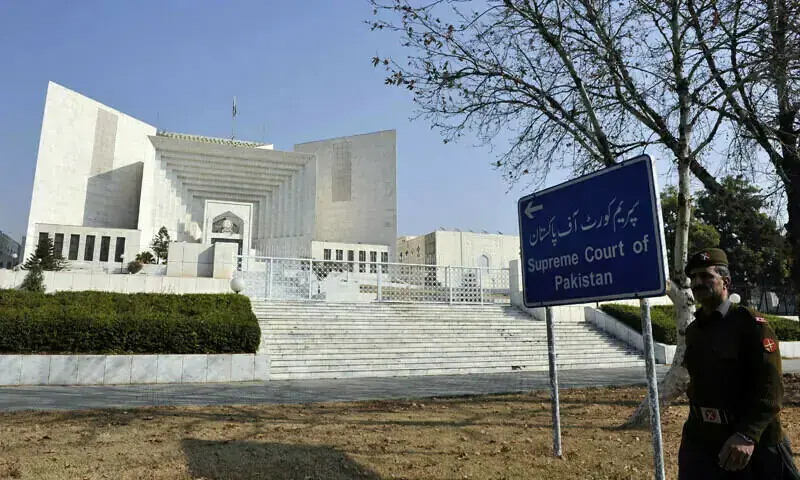
ISLAMABAD: The Supreme Court has notified a policy regarding the abrupt de-listing of cases due to the unavailability of respective benches, saying that such cases will be heard by available judges or automatically fixed for the following week.
The policy aims to facilitate litigants and improve efficiency in the top court amid complaints that petitioners, who have to travel long distances to reach the apex court, sometimes return empty-handed due to this practice. In some instances, their cases are taken up after inordinate delays following their de-listing.
A few years ago, a litigant who was suffering from cardiac problems visited Islamabad from Lahore to attend his case, but it was delisted and then fixed for hearing at a time when the court’s timing was already over.
When he came to attend to his case for the third time, the bench, which was supposed to hear the matter, simply adjourned it without assigning a reason or fixing a new date.
CJP Afridi vows to safeguard dignity, liberty, and equality of people
The Wednesday circular, however, said whenever cases are required to be delisted due to non-availability of the requisite bench or a judge, they shall, so far as practicable, be redistributed among available benches for hearing on the same day after 11:30am. If redistribution on the same day is not practicable, the cases will automatically be fixed for hearing in the following week.
The policy represents the apex court’s commitment to strengthening case management, enhancing judicial accessibility and promoting a litigant-friendly environment, the handout said.
International Human Rights Day
Meanwhile, Chief Justice of Pakistan (CJP) Yahya Afridi, in his message on International Human Rights Day, said the judiciary renewed its constitutional and moral commitment to safeguard the dignity, liberty, and equality of all people.
This day commemorates the adoption of the Universal Declaration of Human Rights (UDHR) — a transformative global pledge that continues to inspire national constitutions, public institutions, and development strategies, including the 2030 Agenda for Sustainable Development.
In an era of rapid social, economic and technological change, the judiciary of Pakistan remains firmly focused on strengthening the rule of law and ensuring that justice is accessible and responsive to the needs of every citizen, the message said.
The statement added that the ongoing reform initiatives aimed to modernise judicial processes, promote transparency and meaningfully reduce the barriers that prevent people, especially the marginalised, from securing their rights.
From improving court procedures and embracing technology to enhancing judicial training and strengthening institutional coordination, each step of reform reflects our commitment to a citizen-centric justice system — one that treats every individual with respect, ensures timely remedies, and upholds fairness without fear or favour.
Published in Dawn, December 11th, 2025
Dawn – Homenone@none.com (Nasir Iqbal)Read More