


My journey into higher education began in my coastal hometown of Pasni, passed through the sprawl of Karachi, and eventually settled in Lyari — a neighbourhood with its own rhythms and ruptures.
Life here is compressed into narrow lanes, where only a sliver of sky is visible between tangled wires, flags, and ageing buildings. Power outages are routine, and space is scarce. In such a place, a library is not a luxury; it is a necessity.
For many residents, the only familiar name is the Mulla Fazil Hall Library. Established in the 1980s, it was known as the Lyari Textbook Library in its early days and became a homestay for students across the town, including myself.
My days were spent there, not just studying, but also listening. With pricked ears, I would eavesdrop on conversations at neighbouring tables with determined attention that drifted from philosophy and poetry to art and music. These conversations were as much shaped by curiosity as they were by survival.
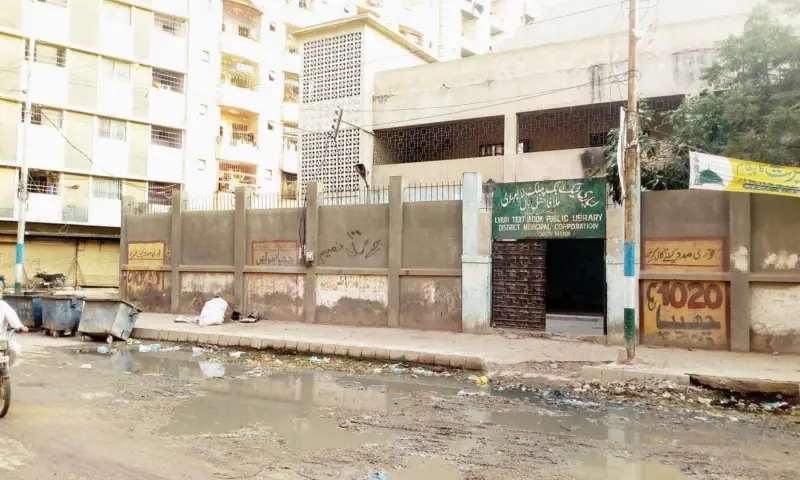
Today, the main library building is undergoing construction and the facility has temporarily been relocated. Reaching it now requires a Qingqi ride along fractured roads, a jolting passage that ends on the main road, followed by a short walk. The bumpy ride often culminates in a locked door as the temporary facility remains closed on most days.
When it is open, access comes at a cost: mosquito-infested rooms where dengue and malaria are constant threats, dilapidated and broken toilets, and the air thick with dust.
This is a paradox at the heart of Lyari — a neighbourhood long known for its intellectual traditions and political consciousness, yet one that today has almost no functioning public library. The hunger for learning persists, but the spaces meant to sustain it have quietly disappeared.
The heart of Lyari
Until a few years back, the Mulla Fazil Hall Library stood tall in the heart of Lyari, at the Aath Chowk, where eight roads finally unite. Every day, this neighbourhood throbs to that heartbeat: dust rising from chipped streets, the foul odour of overflowing drains, bare electrical wires tangled with red and green striped flags, and walls stained with chalk markings of political slogans.
Young boys dart through untidy lanes wearing worn-out football t-shirts featuring Messi, Neymar, Ronaldo and the likes, manholes lie open, puddles glisten with sewage, and yet people move through it all effortlessly, too well-versed in an art that only Lyari teaches. But amid the chaos, a short pause shows what is often missed: Lyari as it truly is — alive, familiar, and stubborn.
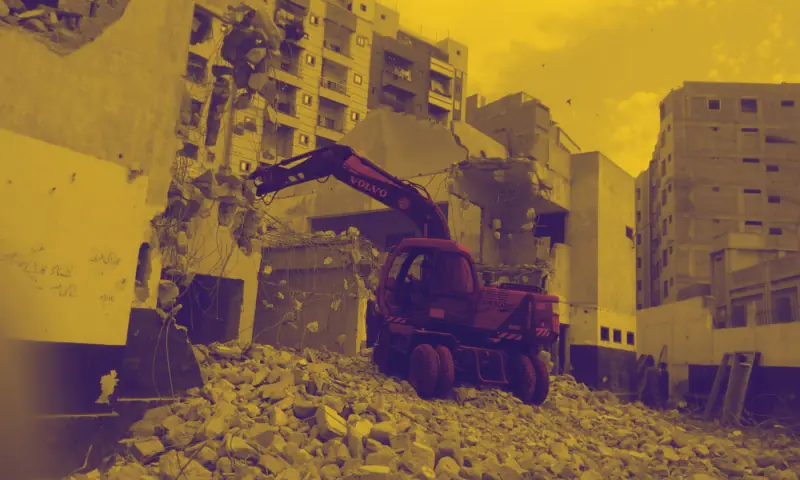
In today‘s Lyari, the Mulla Fazil Library has been replaced by a ‘mini civic centre’. In late 2022, the Sindh government, in a notification, announced the demolition of the library.
Initially, no one took the notification seriously. “I remember reacting with a laughing emoji when I first saw it,” said Imran Fakhir Baloch, a lecturer at the Abdullah Haroon College. In Lyari, he told Dawn, such notices arrived often full of promise but were rarely followed into reality.
“But we were wrong this time,” said Imran.
On January 2, 2023, the Sindh government awarded the contract for the civic centre’s construction. The plan featured a basement, five floors, and a sixth to be added later, all to be completed within one year. Yet, no one clarified where the books, the readers, or the library would fit into the design.
A rare offering
Imran, who also presides over the Lyari Literary Forum — a Baloch-based literary group that has held study circles in the locality since 2017 — recalled that the Mulla Fazil Library was his group’s home. At gatherings there, discussions and debates went on for hours, seamlessly flowing from literature to art, sociology, philosophy and more.
The library, neither too well-equipped nor too visually attractive, was a classic example of years of neglect; its iron shelves rusted, the wood chipped, and books covered in dust.
Yet, the building offered something rare in Lyari — space and light. In a town where the noise never dies and light scrambles to get past the closely-knit multi-storey buildings, the library, with its wide windows and thick walls, was all people needed to sit and read.
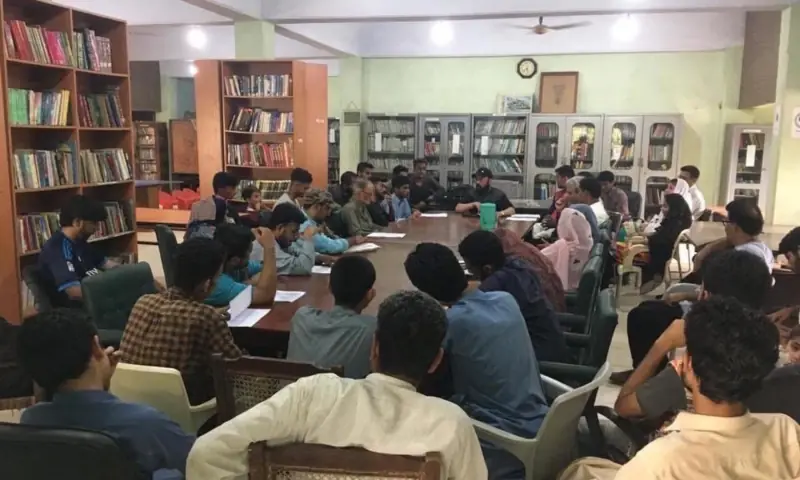
“The beauty of the LLF circles at the library was that they brought together everyone from Lyari in one place, from young students, literary enthusiasts, to the elders. People of all ages sat side by side, listening, debating, learning,” Imran reminisced.
But even before the literary forum came to be, the building had long been a quiet gathering spot for Baloch students. “They would bring their own books, meet after classes, and choose a topic to discuss. That’s how it always was here — people gathering at the day’s end,” said Zahid Barakzai, a central member of the LLF and a regular at the Mulla Fazil Library.
Thus, when the news of the library‘s demolition spread, a shiver of concern ran through Lyari’s avid readers, manifesting in the form of a protest. They had one clear demand: the books must be saved, and the library relocated. Subsequent discussions and meetings took place, but no one stepped up to offer space.
Eventually, Nasir Karim, the then and current chairman of Lyari Town, volunteered to “give space”, all the while emphasising that he was not officially responsible for it. The “space” was a football house owned by him, located a few minutes from the original site of the library.
Demolition day
And then, on a hot summer afternoon, the day of demolition arrived. Amaan Qazi, a longtime resident of Lyari, has the image of that day etched in his mind. “On one side stood the people of Lyari, those who had spent years at the Mulla Fazil Library and on the other, the local stakeholders: councillors, UC office staff, and others.”
“We were waiting, hoping the bulldozers would arrive a little later, just so we could glance at the building one more time,” he recounted to Dawn. But the weak thread of hope that the residents held on to angered the authorities, eventually resulting in an altercation.
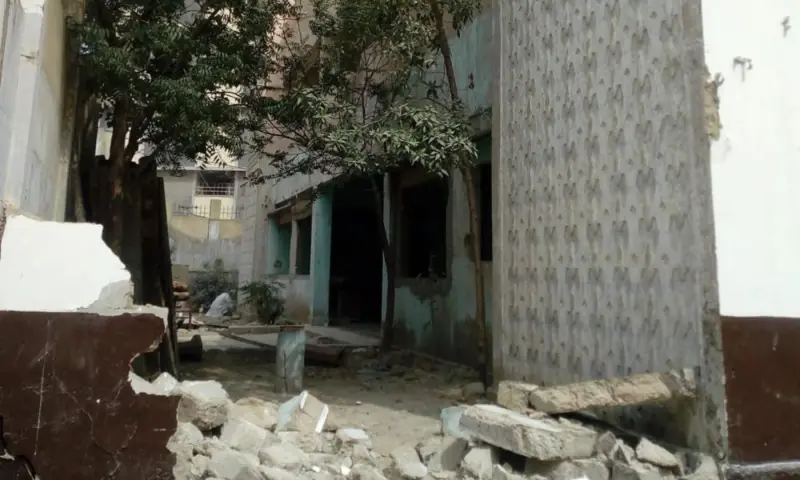
“There was a fight among the stakeholders over who would take more sariya (iron rods) from the remains of the library,“ said journalist Shabir Arman, who covered the day’s events. “But none of them spoke about the books,” he recalled, adding that during the chaos, several bookshelves disappeared. “Maybe they took those too, to sell.”
At a short distance from the site stood Suzuki pickup trucks. They weren’t there for the books, clarified Qazi, but for the officials who loaded the salvaged iron from the library to sell later.
The Mulla Fazil Library housed a total of 10,000 books, of which only 7,000 reached their new home. “During the shifting, so many books and shelves were lost,” recalled Akbar Faiz, who was then in charge of libraries in Lyari.
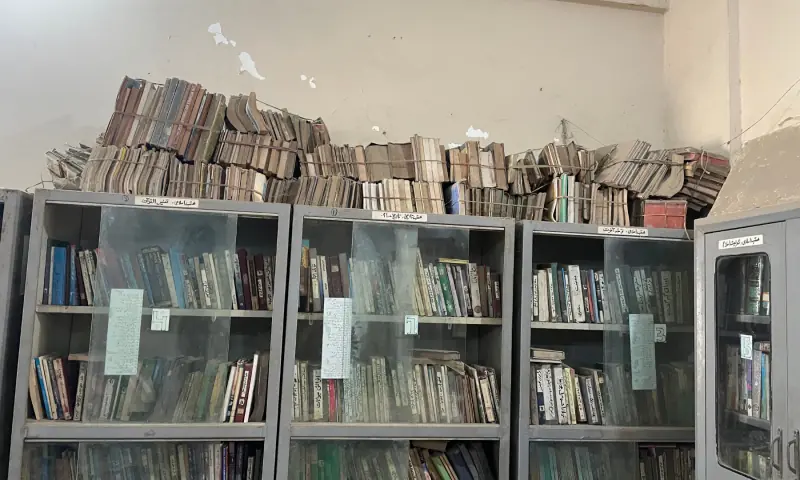
At the football house, the books stayed untouched and unsorted for nearly six months. Rehman Baloch, a member of the Baloch Students Action Committee and another regular at the library, visited the Lyari town office countless times.
“Each time, we were told that the football house was being renovated for the library,” he told Dawn.
But when the time for sorting finally arrived, not much had changed, contrary to what Rehman and his friends had been told for days and months.
The ground floor of the football house, where the library was relocated, was dusty and crumbly. Only the first floor, where the football house’s main gatherings were held, had been freshly painted.
A sad state of repairs
The first time I visited the ‘new’ library — a pale shadow of what it used to be — was a few months back. It is slumped across the main road in Chakiwara, a restless stretch where a bulk of the traffic from Lee Market rushes toward Shershah, and onward to Hub Chowki.
A few steps from the library’s gate, a crowd converges every few hours to catch the Rind Coach, which ferries people between Lyari and Hub Chowki. The sound of engines, horns and chatter never really stops.
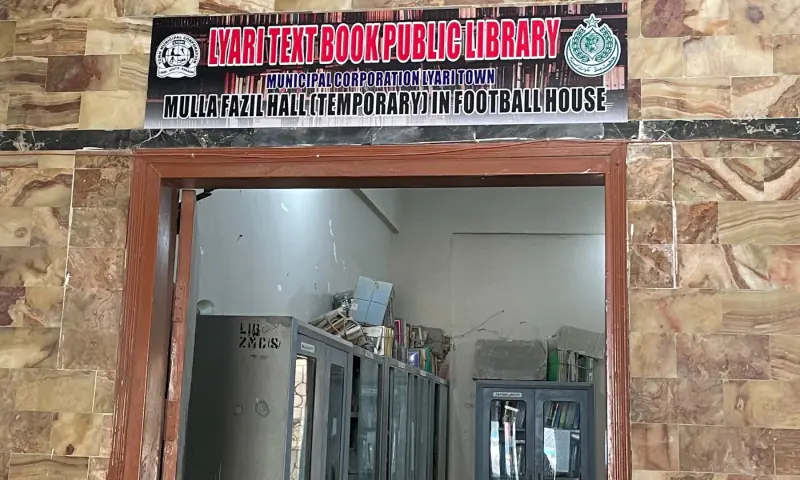
Inside, the library feels small and dim. As I stepped inside, a thin blanket of dust rose, filling my nostrils. Three men greeted me at the entrance: a peon, a member of the football house, and a familiar face from the neighbourhood — all of them conversing at a volume otherwise reprimanded inside libraries.
I cleaned my chair before sitting; a spare handkerchief came in handy in wiping off the dust that covered the seat. The table greeted me with yet another layer to clear. A glance around showed scattered books, some out of shelves, some lying in corners — a telltale sign of the shelves lost during the relocation.
Finally, when I settled down to read and write, my feet itched incessantly. For the first few minutes, I tried to resist the temptation to scratch until I finally gave in. Mosquito bites. Yet, I was adamant. But every few minutes, the noise from the football house upstairs grew louder, making it impossible to concentrate.
When I returned in late September, I found a student bent over his notes, preparing for a medical entry test, a coil of machar jalebi burning beside him, its smoke curling against the walls.
“We wrote to the town chairman about the mosquito issue,” said Akmal Khan, a resident of Chakiwara. “But nothing happened. Most students stopped coming. But I can’t afford to go to Liaquat Library (located in another part of the city) every day, so I bring this coil and sit here anyway.”
Before the demolition, a local donor had gifted a UPS to the LLF for the Mulla Fazil Library — a small relief against the frequent power outages. After the library was shifted to its temporary space at the football house, LLF central member Barakzai said they brought the UPS along. “But it got stolen.”
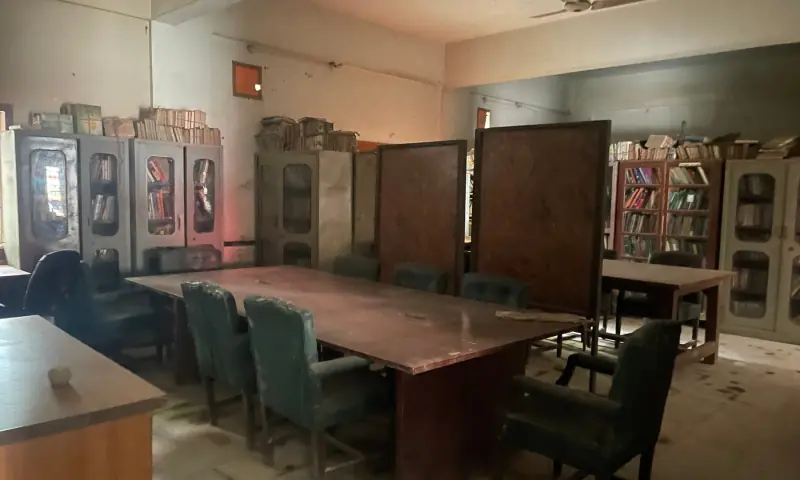
Much like the rest of Lyari, here too, electricity is elusive. “The football house bill hasn’t been paid,” he explained. “Whenever a new line is installed, it’s cut again. Even with the line there, not much changed because electricity here only lasts from 3pm to 5pm.”
In October, I made several visits to the library. Most days, the shutters were shut, but one afternoon I found them open. Inside sat Akbar Baloch, a retired library staffer, along with a few members of the football house. The man currently in charge of the library was away for Zuhr prayers. “He comes around noon,” one of them told me, “and leaves after prayers.”
I waited. When he returned, he quietly walked across the dim room, wheeled out his motorcycle parked inside the football house lawn and left. I stayed back with the staff. Akbar Wali told me he had retired recently, but still came by to pass the time. “Students don’t come here anymore,” he said. “Maybe one or two in a month, by chance.”
Riaz Baloch, known locally as Ustad Jogh, joined in, his voice heavy with irony. “Look around, no water to drink, no washroom, no electricity. Who would want to study in the dark?”
“If you ask the councillor to help with the library, he’ll say he has more important things to handle: like putting lids on manholes,” Ustad added.
The great fall
Lyari, being one of Karachi‘s oldest neighbourhoods, has for decades attracted the biggest names of Pakistan’s literary world: for poet Faiz Ahmed Faiz, the locality was home, where he often frequented to teach, write and read. Muhammad Baig Baloch is another literary figure from Lyari, who wrote several books in Urdu, English, Sindhi and Persian in addition to translating major literary works into the Balochi language
But politics, neglect, and poverty took a toll on what used to be a literary hub.
Ramzan Baloch, who has authored seven books on Lyari’s history and social fabric, has witnessed this progression and fall since the 1960s. “In 1962, Lyari had 27 municipal units, each of which had elected members and a chairman,” he explained. “An ordinance at the time mandated the creation of reading rooms in every unit — places where people came to read newspapers before work, or in the evening after returning home. There was even a separate budget for them.”
“By the 1970s, the local government system changed, and reading rooms began turning into offices; some even got encroached,” he said. “There used to be a fixed annual budget for textbooks, literature, religious works, art, even Balochi titles.”
But the decline began quietly after the year 2000. “The focus on libraries vanished,” Ramzan lamented. “Magazines stopped coming, then newspapers too. Eventually, there was no bill left.”
In 1992, Lyari had 27 libraries, excluding the reading rooms. The number shrank to 11 in the early 2000s, and new books stopped coming in after 2005.
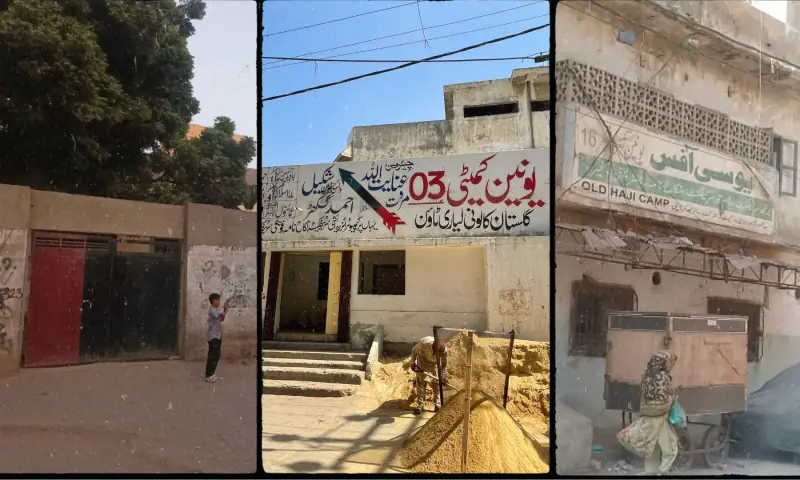
Ramzan explained that the Mulla Fazil Library had its own set of flaws even in its prime — the sewer outside overflowed, its compound was taken over by a Nadra office, and long queues of people left the area crowded. Yet, despite the myriad of issues, the library never failed to provide one thing: space — for dialogue, for ideas, for silence.
“Whatever I’ve written, the knowledge, the habit of reading — it came from that place,” he said, adding that the library’s demolition also halted gatherings of the LLF. “Those meetings were a relief, especially after years of gang violence.”
The fate of the remaining libraries, all visited by Dawn, reflects Lyari’s slow erasure of public learning spaces:
- Baghdadi–Shabaik Lane–Kalari Library (BSK Project) –now a community hall where weddings and Nikkah ceremonies are held
- Syed Mahmood Shah Library – now serves as a UC office for registration of births, deaths, and marriages
- Nishtar Library – converted into a UC office
- Iqbal Shaheed Library, Bihar Colony – deteriorated and damaged
- Umer Lane Library – now functions as a community hall and madrassa
- Iqra Library, Singolane – turned into a boxing club
- Meeran Naka Library – converted into a community hall.
- S. Mohamadin Library, Rangiwara – a library in name only; a few books lie on a table under a roof, shedding sand and stones
- Satellite Library and Reading Room – a twin of the temporary library now housed at the football house
The collapse wasn’t just social, it was also intellectual.
Professor Hasil Murad Baloch of the Benazir Bhutto University, Lyari, explained: “This decline didn’t come overnight. The gang war period destroyed the social structure that made Lyari what it was, affecting the youth the most.”
For decades, newspaper reading had been a daily ritual in Lyari. Elderly men would walk to libraries and reading rooms, flipping through Urdu and Balochi dailies before heading home. “By 2016, even when the streets were calm again, newspapers stopped arriving,” said Nabi Baksh. “There was a tussle between Lyari Town and UC offices over who would pay for them. In the end, no one did.”
By 2020, even the Mulla Fazil Library stopped receiving newspapers. “There was no payment for months, maybe years.”
Ismail Baloch, the newly appointed Human Resource Director of Lyari Town, admitted that the Town Municipal Commissioner (TMC) is responsible for facilitating the libraries. “There’s always a fund,” he said. “But it’s not always allocated … maybe.”
Development or plundering?
Back at the Aath Chowk, construction of the mini civic centre continues unabated. Town officials insist it will revive the library in a “modern form”.
Nasir Karim, the Lyari town chairman, told Dawn that the first floor of the centre has been allocated for the library. “It will be a digital library,” he said, “and both boys and girls will have their own sections.”
The ground floor of the complex, he continued, would accommodate Nadra. “There will also be other civic facilities, like offices for K-Electric, the water board, and the passport department, as well as an auditorium for Lyari’s artists, similar to the Karachi Arts Council, and a cafeteria.”
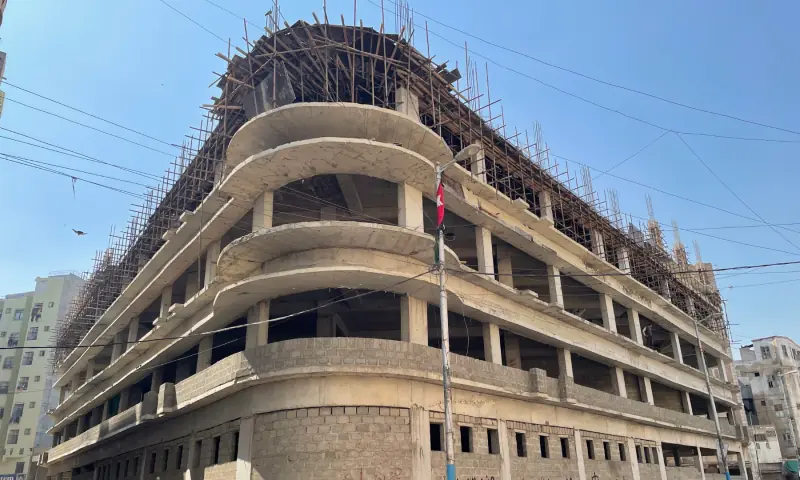
Karim‘s assurances, however, do nothing to placate the readers of Lyari, who are convinced that the construction of the new complex would entirely erase the Mulla Fazil Library’s essence.
“Where will a library fit between offices and government departments?” questioned Ramzan Baloch. “A library needs silence, space, an aura of its own.”
“This isn’t development. It’s just plundering.”
Header image: A bulldozer razes down the Mulla Fazil Library in Karachi’s Lyari neighbourhood. — All photos by author
Dawn – Homenone@none.com (Hazaran Rahim Dad)Read More