


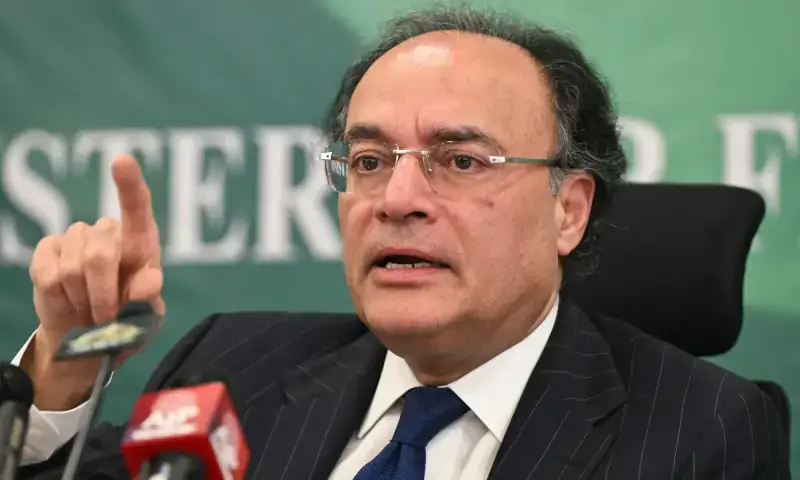
ISLAMABAD: Finance Minister Muhammad Aurangzeb has said the IMF’s Governance and Corruption Diagnostic Assessment (GCDA) report was a step towards much-needed institutional reforms, adding that the government had itself initiated and facilitated the process.
Winding up the debate on a motion moved by JUI-F’s Kamran Murtaza in the Senate on Monday, the finance minister said the report covered seven areas, including judicial oversight and corruption, and identifies structural deficiencies — which he termed a positive development. He said it provided 15 recommendations for institutional reforms.
He assured the Senate that work on these recommendations was underway, citing the recent law passed by parliament requiring public servants to declare their assets. “We will share our action plan on institutional reforms with the public and parliament,” he said, adding that such diagnostic reports had been released for many countries and represented best practices to assess governance in other jurisdictions.
He dismissed concerns over a delay in releasing the report, which some critics linked to corruption-related findings, saying the process took time because input had to be gathered from relevant institutions.
Aurangzeb rejects delay claims, cites thorough review process
The finance minister rejected the perception that the government had delayed or attempted to withhold the publication of the IMF report, telling the house that the document underwent a rigorous review process involving extensive consultations. “I come from the private sector,” he said. “When a report is issued, it is circulated among departments, feedback is taken, some points are incorporated, others are rejected.”
Mr Aurangzeb said that around 100 meetings were held and more than 30 institutions were involved in the compilation process. He dispelled the impression that the IMF report had any connection to the latest audit report of the Auditor General of Pakistan or a separate report issued by the State Bank of Pakistan.
He also endorsed points raised regarding governance improvements, professional capacity in technical ministries and remuneration reforms. These matters, he said, were being reviewed by the Civil Service Reforms Committee headed by Planning and Development Minister Ahsan Iqbal, of which he is also a member.
The finance minister also highlighted the government’s efforts to digitise the economy, emphasising its potential for transparency and efficiency, saying it was faster, cheaper and more transparent.
He added that the FBR chairman should brief lawmakers on steps taken to shift towards a digital economy. Kamran Murtaza suggested referring the matter to a committee for discussion, calling the report an important document that raised concerns about the country’s judicial system and overall governance.
Climate change
Meanwhile, Federal Minister Aurangzeb on Monday said climate change is an urgent economic reality for Pakistan, reaffirming the government’s commitment to advancing sustainable finance, implementing green taxonomy and establishing climate-aligned disclosure frameworks.
Stressing the need to support SMEs in formalising their financial reporting practices, he highlighted the country’s proactive regulatory approach in digital assets and emerging technologies, where new institutional frameworks are being established to integrate innovation into a formal, transparent, and compliant economy.
The finance minister made these observations while meeting a delegation, led by Jean Bouquot, president of the International Federation of Accountants (IFAC).—With input from APP
Published in Dawn, December 2nd, 2025
Dawn – Homenone@none.com (Iftikhar A. Khan)Read More