


AS we close 2025, it is time to take a hard and honest look at the lay of the land of the Islamic Republic of Pakistan.
Nearly 78 years after independence, Pakistan’s politics remains deeply unsettled. Of these years, approximately 33 were spent under four periods of direct military rule, with the remainder under various shades of indirect or hybrid regimes. It took 23 years for the country to hold its first general elections. To date, Pakistan has had 29 prime ministers — including caretakers and repeat tenures — yet not a single one has completed a full five-year constitutional term.
Decline is not destiny. All these crises are man-made and reversible.
Pakistan’s first prime minister, Liaquat Ali Khan, was assassinated in 1951. Zulfikar Ali Bhutto was executed in 1979. Benazir Bhutto was assassinated in 2007. Former PM Imran Khan has been incarcerated for nearly two years and sentenced to a cumulative 51 years.
Externally, Pakistan has fought four major wars with India — in 1947-48, 1965, 1971, and 1999 — and continues to experience border tensions, including earlier this year in May. The dismemberment of the country in 1971 remains a major national trauma. In 1998, Pakistan became one of the world’s nine nuclear-armed states.
Demographic pressures have compounded these challenges.
In 1947, West Pakistan’s population was approximately 32.7 million; today Pakistan’s population is close to 250m. East Pakistan, with a population of around 40m in 1947, as Bangladesh is now roughly 177m people. Pakistan’s population growth has outpaced its ability to govern, grow, educate, employ, and provide basic services.
The key determinants of national development — political stability, governance, respect for the Constitution and rule of law, inclusive institutions, economic growth, security, corruption control, and quality of life — are all in visible decline.
Politically, Pakistan lurches from one crisis to another. The current conflict is among the most serious in recent history. Since the tragic events of May 9, 2023, political polarisation has only intensified. At the heart of this crisis lies the unresolved question of civil-military relations.
Security challenges further darken the picture. Cross-border terrorism is on the rise, insurgency continues in Balochistan, and relations with neighbouring countries have deteriorated, including now Afghanistan.
Governance failures are equally stark.
Following the 18th Constitutional Amendment, provinces were granted authority and resources to manage policing, infrastructure, water and sanitation, health, education, and local governments. Yet provincial governments have largely failed to deliver.
Local government elections are routinely delayed or avoided to prevent the devolution of power and resources. Instead, development funds are distributed through MNAs and MPAs, fostering patronage, inefficiency, and corruption.
Despite long tenures — PPP in Sindh since 2008, PTI in KP since 2013, and repeated PML-N governments in Punjab over decades — the quality of governance and service delivery remains dismal. In southern Punjab and other marginalised regions, conditions are particularly dire.
The Constitution itself has been weakened. Politically motivated amendments, notably the 26th and 27th, have eroded judicial independence. Fundamental rights guaranteed under Part II, Chapter One of the Constitution are routinely violated, as are the Principles of Policy outlined in Chapter Two. Laws such as PECA, 2016, are increasingly used to suppress dissent.
The erosion of the rule of law is reflected in global rankings. The World Justice Project defines the rule of law as the foundation of justice, opportunity, and peace. In its 2024 index covering 143 countries, Pakistan scored 0.37, ranking 130th overall. Among South Asian countries, only Afghanistan ranks lower. Most alarming is Pakistan’s last-place ranking — 143 out of 143 — in the “order and security” category.
Economically, the situation is grim. Pakistan’s average growth rate over the past three years stands at just 1.7 per cent — the lowest for any three consecutive years in the country’s history. Approximately 45pc of the population lives below or near the poverty line, while unofficial unemployment assessment is at 22pc. This means nearly every second Pakistani is poor or near-poor, every fourth citizen is unemployed, and youth unemployment is even higher. Inflation over the past three to four years has reduced purchasing power by an estimated 65pc.
Taxation levels are among the highest in the world, with salaried classes bearing a disproportionate brunt. Corporations face effective tax rates of around 60pc, while electricity tariffs are higher than in most comparable countries. The cost of doing business has become prohibitively high, driving companies out of Pakistan and depressing investment to historic lows, despite official claims that the economy has ‘stabilised.’
Pakistan’s Human Development Index ranking has steadily worsened over the past decade. In 2024, Pakistan ranked 168 out of 193 countries, with all South Asian states except Afghanistan performing better. Health and education systems are in crisis: 40pc of children are stunted, and an estimated 40pc of school-age children are out of school. Pakistan ranks among the worst globally for neonatal mortality, hepatitis C prevalence, and type-II diabetes, and remains one of only two countries where polio has not been eradicated.
Women — half the population — continue to face systemic discrimination, exclusion, and lack of voice. In the World Economic Forum’s Global Gender Gap Report 2025, Pakistan ranked last: 148 out of 148 countries.
This is the sobering reality as 2025 draws to a close. But decline is not destiny. All these crises are man-made and therefore reversible.
History offers perspective. In 1965, Pakistan’s GDP per capita was comparable to that of China, Indonesia, Malaysia, and South Korea. Today, all are far ahead. In the 1990s, Pakistan was South Asia’s richest country and ranked above both India and Bangladesh on the Human Development Index. Many of these countries faced deep political and economic crises, yet emerged through sustained reforms, institutional strengthening, and political consensus.
Credible economists now agree that Pakistan’s current economic model is unsustainable. Yet recovery remains possible — if the country undertakes fundamental shifts in governance, economic policy, and institutional integrity.
Ultimately, everything hinges on politics. Without resolving the present political conflict and its underlying causes, no economic or social reform can sustainably succeed. Pakistan urgently needs a broad national consensus on a new direction. As the new year approaches, such consensus appears distressingly distant.
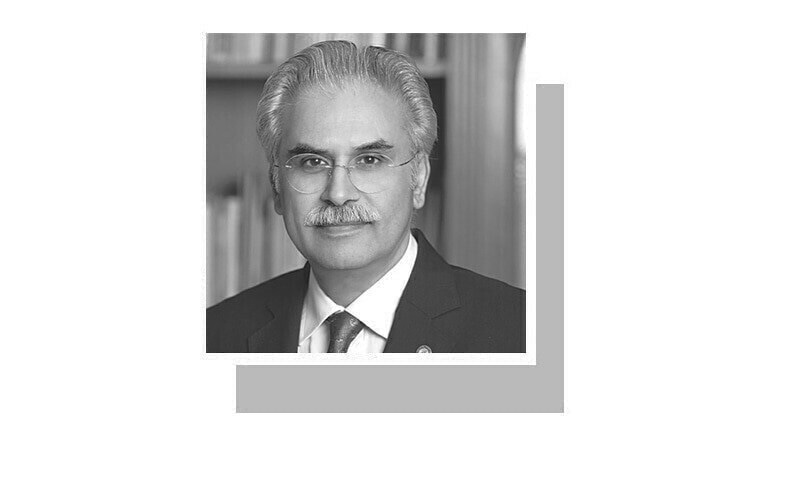
The writer is a former SAPM on health with ministerial status, adjunct professor of health systems and president of the Pakistan Association of Lifestyle Medicine.
Published in Dawn, December 26th, 2025
Dawn – Homenone@none.com (Zafar Mirza)Read More